

Tropical moist forests are known to support high levels of biodiversity, provide numerous ecosystems services, store carbon, and provide many other important ecological functions. Fragmentation of tropical forests is an increasing threat, and being able to quantify the impacts of forest degradation is key to creating effective forest-based mitigation policies. However, measuring these impacts at a relevant scale across the entire globe represents a major challenge.
Fortunately, new technology has allowed for a more precise analysis of tropical forest degradation. Researchers combined Landsat imagery with data from the Global Ecosystem Dynamics Investigation (GEDI) instrument, which was deployed on the International Space Station in 2018 and provides spaceborne LiDAR observations.
Bourgoin, C., Ceccherini, G., Girardello, M., Vancutsem, C., Avitabile, V., Beck, P.S.A., Beuchle, R., Blanc, L., Duveiller, G., Migliavacca, M. and Vieilledent, G. 2024. Human degradation of tropical moist forests is greater than previously estimated. Nature 631: 570-576.
This improved technology allowed researchers to quantify the extent of tropical forest degradation with several key measurements: the extent of forest edge effects, the impacts of disturbance over time, the rates of forest recovery after degradation, and the vulnerability of degraded forests to further deforestation.
The analysis of over 23 million sample “footprints” of GEDI data showed how much degraded forests differ from intact forests. On a global scale, intact tropical forests in Asia had larger and taller trees than forests in Africa and South America. Locally, disturbance was a large driver of canopy height and aboveground biomass: compared to intact forests, disturbed forests had shorter canopies and lower aboveground biomass, a trend that continued even as forests regrew.
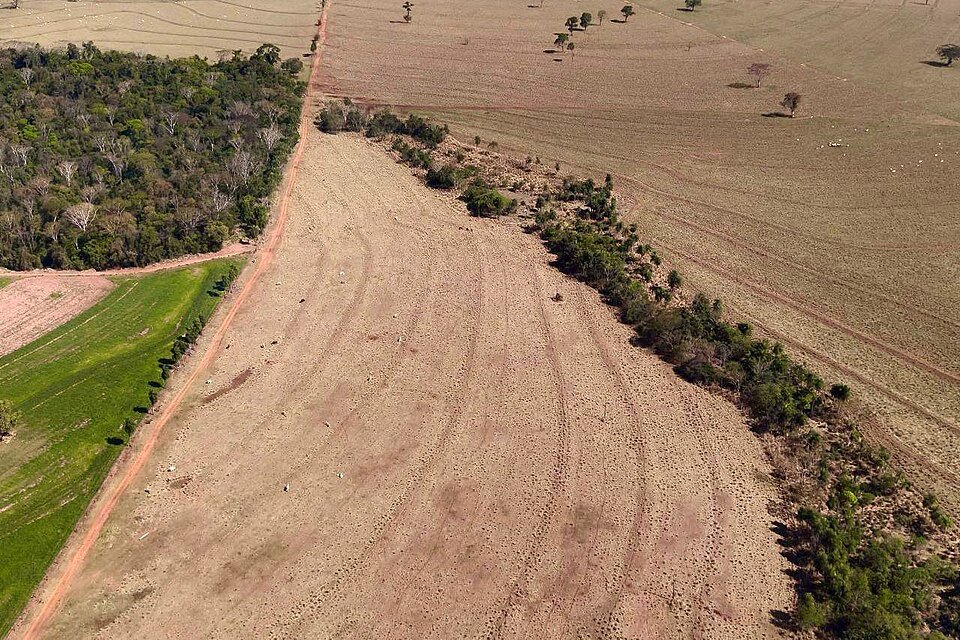
Edge effects from disturbance led to significantly shorter canopies as far as 1.5km from the forest edge, with some areas in the Americas showing significant edge effects up to 7km from the edge. Canopy height was reduced on average by 20% within the first 200m of the forest edge compared to intact forests. Edge effects also led to decreased above ground biomass as far as 1km from the forest edge. Overall, the area of forest impacted by edge effects represented 18% of the entire forest area across the globe.
Creating forest edges also impacted forest recovery over time. Over a 30 year period (1990-2022), there was no significant improvement in canopy height or above ground biomass. Disturbances such as selective logging and fire had significant impacts on forest structure, and these impacts continued for three decades. Forest regrowth of deforested land remained slow over time, with canopy height plateauing at around 60% of intact forests after 10-15 years and above ground biomass plateauing at less than 50% of intact forests after 20 years.
The fates of forests were also highly impacted by degradation. Increasing forest degradation was directly linked to an increased probability of deforestation. A 50% deforestation probability was reached when forests lost 50% of their canopy height in the Americas and 60% of their canopy height in Africa and Asia.
These results emphasize the magnitude of tropical forest degradation, with the overall spatial impact of fragmentation across tropical forest across the global likely to be 200% greater than previously estimated. They also highlight how vulnerable tropical forests are to further deforestation once degradation has started, and how recovery from degradation may take decades or even centuries. Mitigating damage and preventing further degradation by protecting intact, continuous tropical forests is key to maintaining biodiversity and ecosystem services across a critical global ecosystem.
Related Posts

Rethinking the economic costs of forest protection for 30×30
A new analysis shows that protecting connected forests to meet 30x30 goals may cost far less than previously thought, as global market responses can offset reduced timber production.
Forest fragmentation and loss intensifies droughts
As forests become more patchy, they not only lose connectivity but also see a disruption in the land-atmosphere feedbacks that help stabilize regional water cycles.

Indigenous areas provide crucial ecosystem connectivity
Indigenous territories and protected areas cover over half of the Amazon basin and sustain significantly high levels of ecosystem connectivity, making them a vital part of protected area networks.
