

As forests are cleared and fragmented into smaller patches, many wildlife species disappear from the remaining habitat. Conservation efforts have traditionally focused on protecting the largest possible patches of intact habitat, based on the idea that bigger areas support more species.
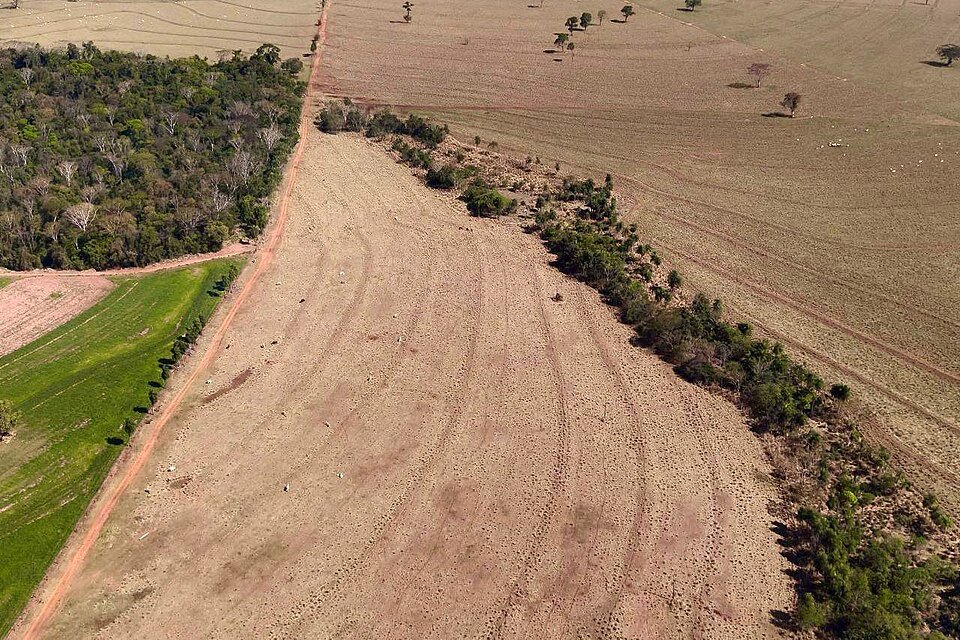
Yet much of the world’s biodiversity now exists in fragmented landscapes where forests, farms, pastures, and other land uses exist side by side. Understanding how the land surrounding habitat patches influences wildlife is essential for designing conservation strategies that work in these human-modified landscapes.
Bueno, A.S., Mendenhall, C.D., Anciães, M., et al. 2026. High-quality surrounding landscapes mitigate avian extirpations from forest remnants. Proceedings of the National Academy of Sciences, 123(14): e2521783123. DOI: 10.1073/pnas.2521783123
Connectivity is a key part of this challenge. If animals can move between habitat patches and find food or shelter in the surrounding landscape, even relatively small remnants may continue to support diverse communities. Improving the quality of the matrix, the land between habitat patches, could therefore become an important complement to protecting forests themselves.
To test this idea, researchers assembled one of the largest global datasets examining birds in fragmented tropical and subtropical forests. The analysis combined 50 datasets from 45 studies, representing 1,005 forest remnants, including 336 forest islands created by reservoirs and 669 forest fragments surrounded by terrestrial landscapes. Altogether, the study included almost 2,000 bird species recorded through more than 39,000 survey records.
The researchers compared how bird diversity changed with forest patch size in two very different settings: islands isolated by water and forest fragments embedded within terrestrial landscapes. They also evaluated whether the amount of nearby tree cover influenced species richness.
The results show that the surrounding landscape plays a major role in determining how many birds remain in fragmented forests. Small forest fragments surrounded by terrestrial landscapes supported far more species than similarly sized forest islands. In 1-hectare remnants, terrestrial fragments contained 139% more bird species overall and 143% more forest-dependent species than islands. Species losses associated with shrinking habitat area were also reduced by more than 50% in terrestrial landscapes.
Tree cover provided an additional benefit. Increasing tree cover within 300 meters of a forest remnant boosted bird diversity, especially for forest specialists. For a 5-hectare fragment, one standard deviation increase in nearby tree cover increased the expected richness of forest-dependent birds by 16% and all bird species by 9%. Greater tree cover also reduced predicted local extirpation rates for forest-dependent species.
These findings reinforce a growing message in conservation: success depends on more than protecting isolated habitat patches. Small forest remnants can provide substantial biodiversity value when they remain connected through permeable, tree-rich landscapes. Restoring tree cover, improving matrix quality, and maintaining habitat connectivity can help keep fragmented ecosystems functioning and make area-based conservation strategies more effective in an increasingly human-dominated world.
Related Posts
Forest fragmentation and loss intensifies droughts
As forests become more patchy, they not only lose connectivity but also see a disruption in the land-atmosphere feedbacks that help stabilize regional water cycles.

The role of the matrix at patch and landscape scales
A study on cactus bugs in an experimental Florida landscape underscores the importance of matrix habitat immediately adjacent to habitat fragment edges.

Over half of global forests have become more fragmented
A new global analysis uses multiple metrics incorporating habitat connectivity and aggregation to reveal that more than half of the world’s forests have become increasingly fragmented since 2000.
