

As the world works toward global conservation targets such as the 30×30 goal of protecting 30% of lands and waters by 2030, maintaining ecological connectivity has become a cornerstone of effective conservation.
Connectivity limits the negative effects of habitat fragmentation by allowing species to move, disperse, and adapt to changing environments. It also sustains key ecosystem processes such as nutrient cycling and carbon storage. Measuring and tracking fragmentation with ecologically meaningful metrics is therefore critical for designing and maintaining connected landscapes that can support biodiversity into the future.
Zou, Y., Crowther, T.W., Smith, G.R., Ma, H., Mo, L., Bialic-Murphy, L., Potapov, P., Gawecka, K.A., Xu, C., Negret, P.J. and Lauber, T. 2025. Fragmentation increased in over half of global forests from 2000 to 2020. Science 389(6765): 1151-1156.
Forests are among the ecosystems most affected by fragmentation, yet previous studies have reported conflicting results on whether fragmentation is increasing or decreasing globally. Much of this inconsistency arises from how fragmentation is measured. Structural metrics, which focus on patch size and number, often fail to capture how habitat patches are arranged across a landscape or how easily species can move among them. A more complete understanding requires metrics that assess both spatial arrangement and functional connectivity, offering a clearer picture of how fragmentation affects ecological integrity.
A recent global assessment addressed this challenge by analyzing forest fragmentation between 2000 and 2020 using high-resolution satellite data and nine established landscape metrics. These were grouped into three categories: structure, aggregation, and connectivity. Structure-based measures described how forests were subdivided; aggregation metrics assessed how clustered or dispersed forest patches were; and connectivity metrics incorporated both patch size and spatial configuration to represent how well landscapes facilitate movement.
The researchers combined these into three composite indices: a connectivity-based fragmentation index (CFI), an aggregation-based fragmentation index (AFI), and a structure-based fragmentation index (SFI). They also compared these indices to metapopulation capacity, a measure of how well landscapes support long-term species persistence.
The study found sharp contrasts among the different measurement approaches. Based on connectivity metrics, 51-67% of forests globally became more fragmented over the two decades, with rates even higher in tropical regions (58-80%). Aggregation metrics produced similar results, showing that 57-83% of forests became more fragmented.
In contrast, structure-based methods indicated only 30-35% fragmentation, since they treat the loss of small connecting patches as a reduction in fragmentation. Connectivity-based measures aligned most closely with ecological indicators, revealing that many forests have lost critical links that support species movement and ecosystem function.
Human activities were the dominant cause of these changes. Shifting agriculture and forestry accounted for 37% and 34% of global fragmentation increases, while wildfires and commodity-driven deforestation each contributed 14%. Regionally, shifting agriculture drove 61% of fragmentation in tropical forests, forestry was the main driver in temperate regions (81%), and wildfires and forestry together dominated fragmentation in boreal regions.
Protected areas played a crucial role in reducing fragmentation, especially in the tropics. Strictly protected tropical forests experienced 82% less fragmentation than comparable unprotected areas, while less strictly protected zones showed a 45% reduction. These differences were linked to lower rates of shifting agriculture and forestry within protected boundaries. However, some protected areas outside the tropics showed slightly higher fragmentation, likely due to inconsistencies in how “strict protection” is defined.
The findings underscore that progress toward global conservation targets will require more than expanding protected area coverage. Conservation planning must incorporate metrics that capture connectivity and aggregation, not just structure, to ensure that landscapes function as cohesive ecological networks. By using these tools, conservation planners can better target restoration, strengthen habitat corridors, and track whether protected areas truly support connected, resilient ecosystems.
Related Posts

Reviewing four decades of fragmentation metrics
A review of fragmentation metrics since 1990 shows how methodologies have shifted over time, and what work still needs to be done to ensure transferable and ecologically grounded research.

High-quality matrices support bird diversity in forest fragments
Global data from forest islands and forest fragments show that improving tree cover and landscape connectivity around small forest fragments can dramatically increase bird diversity and reduce local extinctions.
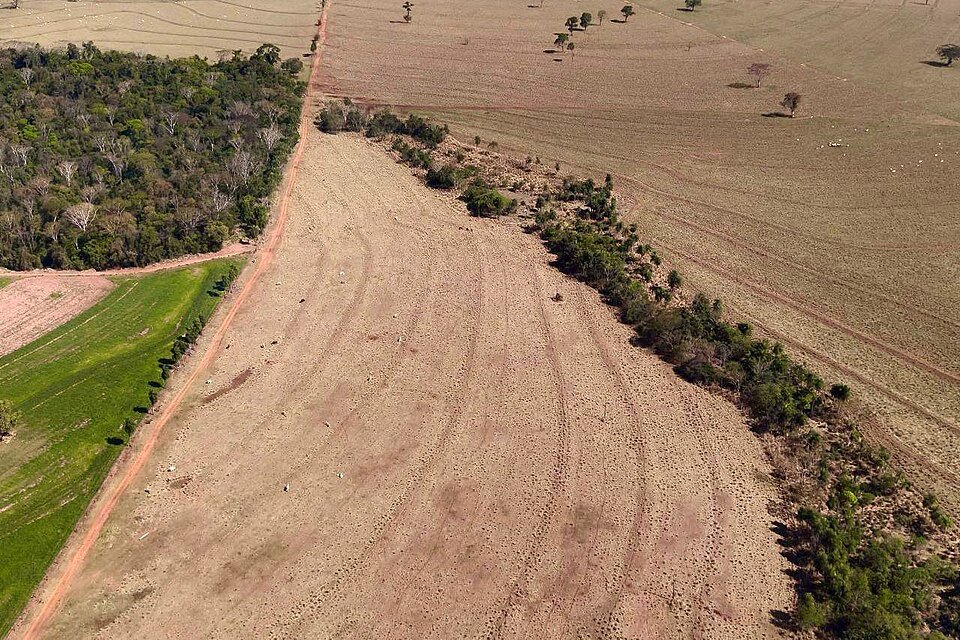
Forest fragmentation and loss intensifies droughts
As forests become more patchy, they not only lose connectivity but also see a disruption in the land-atmosphere feedbacks that help stabilize regional water cycles.
