

High quality corridors help protect biodiversity in many ways. For example, they mitigate the negative genetic effects of habitat fragmentation, support sensitive and specialized invertebrates, and increase floral biodiversity.
Recent research indicates that they can also help buffer wildlife from the effects of climate change. As landscapes are altered by drought, heat, and habitat loss, wildlife need corridors in order to escape unsuitable conditions and find climate resilient refugia. But it’s not just about the destination – the journey matters too. A recent study using experimental metapopulations indicates that high quality corridors can buffer wildlife from extinction caused by drought.
Li, D., Memmott, J. and Clements, C.F. 2023. Corridor quality buffers extinction under extreme droughts in experimental metapopulations. Ecology and Evolution 13: e10166.
Researchers used springtails (Folsomia candida) as a study system. These small, soil dwelling anthropods are highly sensitive to drought because they rely on moisture to complete their life cycles. The researchers designed and 3D printed model landscapes, or microcosms, containing patches connected by corridors. Springtails were reared inside these model landscapes as the researchers manipulated the moisture of the patches and the corridors to determine whether corridor quality could change metapopulation extinction patterns.
Treatment variables included corridor quality (good vs. poor), drought severity (severe vs. weak), and rate of patch conversion to drought (fast vs. slow), as well as a control group that experienced no change. In this case, “good” corridors were kept moist, while the “poor” corridors were allowed to dry out. Patches were also randomly hit by drought treatments throughout the 16 week experiment. The researchers measured the rates at which metapopulations in the patches declined and went extinct.
At the end of the experiment, the data revealed that in microcosms with good corridors, metapopulations went extinct more slowly and were less impacted by new drought patches. Unsurprisingly, stronger drought severity increased extinction risk and rates. However, in patches with good corridors, the populations declined steadily, while patches with poor corridors saw small changes in abundance followed by a sharp drop.
Good corridors also led to more consistent abundance between patches, as animals weren’t trapped in poor quality habitats or clustered in better ones. This means that when a drought hit a single patch, it was less likely to wipe out a disproportionately large metapopulation. This result also indicates that high quality corridors may play a role in reducing negative density-dependent interactions when suitable habitat is scarce.
Drought stress doesn’t just affect the connectivity of springtails in artificial landscapes – it’s already impacting elk, whooping cranes, and Amazonian flora, among others. Experimental models like those used in this study show patterns that are also present in natural ecosystems and at larger scales.
This study also underscores the importance of strong corridor design. Of course, what makes for a high quality corridor depends on the species using it. Building strong corridors requires attention to functional connectivity. It’s a worthwhile effort. Understanding how corridor quality can change how metapopulations respond to climate stress is critical to building corridors that will buy wildlife – and humans – more time to respond and adapt.
Related Posts
Forest fragmentation and loss intensifies droughts
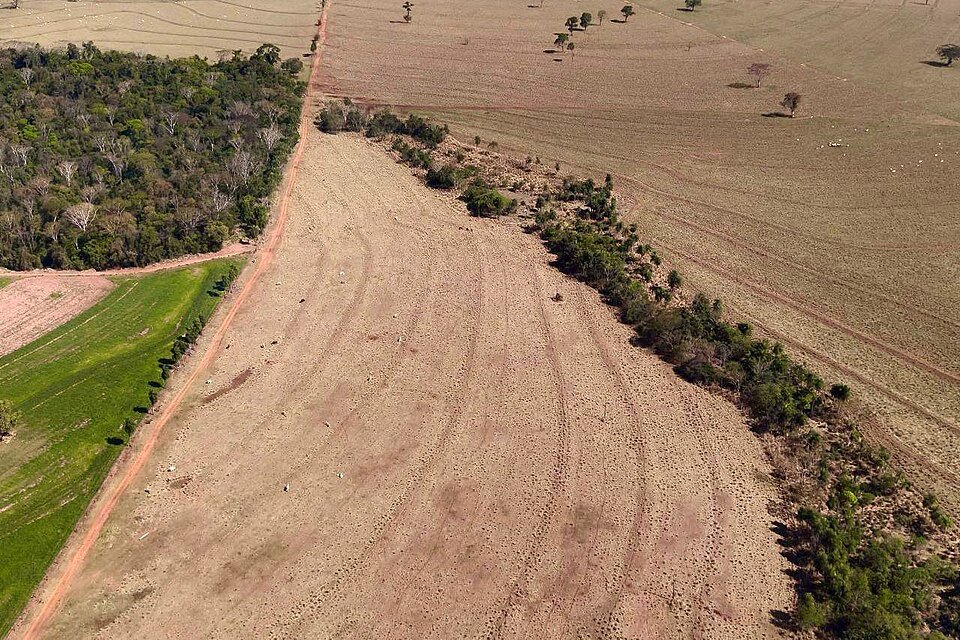
As forests become more patchy, they not only lose connectivity but also see a disruption in the land-atmosphere feedbacks that help stabilize regional water cycles.

Forest edge effects intensified by drought
Edge effects on moss growth in boreal forests of Sweden were almost double in a drought year, but forests with denser canopies were better able to mitigate this impact.

Can high-quality corridors buffer wildlife from climate extinction?
Springtails released in 3D printed microcosms were more likely to persist under drought conditions when populations were well-connected to each other via corridors.

