
Urbanization and agriculture represent the two most dramatic changes to landscape that wildlife may encounter. Despite the adaptability of many generalist species, land use changes affect connectivity in ways that are still undetermined. Particularly in urban and arable habitats, there has been little comparison of how population connectivity at the genetic level differs between these two habitats. Is one more connected than the other?
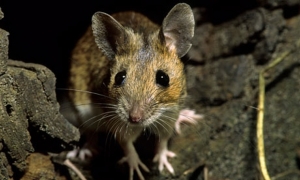 In their recent paper in Ecography, Wilson et al. look at how urban areas and arable areas affect genetic flow and genetic diversity to answer questions about landscape connectivity. Using wood mouse populations in Scotland, they trapped individuals from six arable and seven urban sites and collected hair samples for genetic testing. They also calculated several distance measures to explore multiple potential pathways for gene flow in both land use types.
They found that gene flow was greater in arable habitats than urban habitats, and lower genetic diversity was found in urban habitats. Patterns of genetic differentiation in arable habitats were best explained by Euclidean or overland distance, whereas for urban areas they were better explained by metrics that accommodated differences in land quality.
There was no evidence that roads hindered population connectivity, or that gene flow occurred primarily through road verge corridors. Urban populations were more isolated, likely to a high degree of fragmentation that was not mitigated by dispersal corridors. Overall, it appears that urban habitats were more fragmented, with populations more genetically differentiated than in arable habitats where frequent disturbance might encourage dispersal through the landscape.
Resources
Wilson, A., B. Fenton, G. Malloch, B. Boag, S. Hubbard, and G. Begg. 2016. Urbanisation versus agriculture: a comparison of local genetic diversity and gene flow between wood mouse Apodemus sylvaticus populations in human-modified landscapes. Ecography 39(1): 87-97.
Landscape genomics of dispersal corridors in NYC (August 2013)
