

Tropical forests are a critical component of the global ecosystem. They support high levels of biodiversity, provide a large number of ecosystem services, sequester significant amounts of carbon, and act as buffers for changing climatic conditions. However, deforestation has lead to increasingly fragmented tropical forests around the world, leading to less forest area and more forest edges. Quantifying tropical forest fragmentation at a meaningful resolution across large spatial and temporal scales remains a challenge.
Fischer, R., Taubert, F., Müller, M.S., Groeneveld, J., Lehmann, S., Wiegand, T. and Huth, A. 2021. Accelerated forest fragmentation leads to critical increase in tropical forest edge area. Science Advances 7(37): eabg7012.
A new analysis tackles this issue by using high-resolution (30m pixel) forest cover maps to quantify changes in tropical forest fragmentation across America, Africa, and Asia from 2000 to 2010. An efficient cluster detection algorithm helped in determining size and spatial configuration of fragments, along with identifying critical edge area and quantifying forest transitions.
The resulting numbers are striking. The number of forest fragments overall increased by over 20 million in 10 years, with Africa showing a 42% increase in fragments. The average size of these forest fragments decreased overall from 15 ha to 12 ha. The fraction of forest edge area to total forest area increased on average from 27% to 31%. Africa showed the greatest increase – from 30% to 37% – mainly due to an increase of 20 million small fragments (<10ha). Most forest lost occurred at the edge of fragments, with up to 77% of loss within 100m of the forest edge.
Changes in forest fragmentation numbers are a product of both forest loss and forest gain. Between 2000 and 2010, 177 million ha of forest core area was lost due to deforestation or (more commonly) increased forest edge due to deforestation, along with the loss of 108 million ha of forest edge area. However, this was countered with a gain of 93 million ha of forest core area and 51 million ha of forest edge area due to reforestation or afforestation.
Based on this information, future projections show that by 2100, about half of the global tropical forest will be in edge areas. Even if the net deforestation rate becomes half of what it is currently, the ratio of edge area to forest area will still increase to 40%.
What are the larger consequences of this increase in forest fragmentation and forest edges? Beyond harboring high biodiversity, intact tropical forests act as effective carbon sinks and buffers for micro-climate changes. Deforestation contributes significantly to carbon emissions, particularly through the complex consequences of edge effects. Fragmentation alters the hydrological cycle, through impacts on both precipitation and topological flow.
The impacts of tropical forest fragmentation likely reach beyond current predictions. Keeping these forests intact remains a major conservation challenge to protect stable ecosystems across the globe.
Related Posts

Reviewing four decades of fragmentation metrics
A review of fragmentation metrics since 1990 shows how methodologies have shifted over time, and what work still needs to be done to ensure transferable and ecologically grounded research.

High-quality matrices support bird diversity in forest fragments
Global data from forest islands and forest fragments show that improving tree cover and landscape connectivity around small forest fragments can dramatically increase bird diversity and reduce local extinctions.
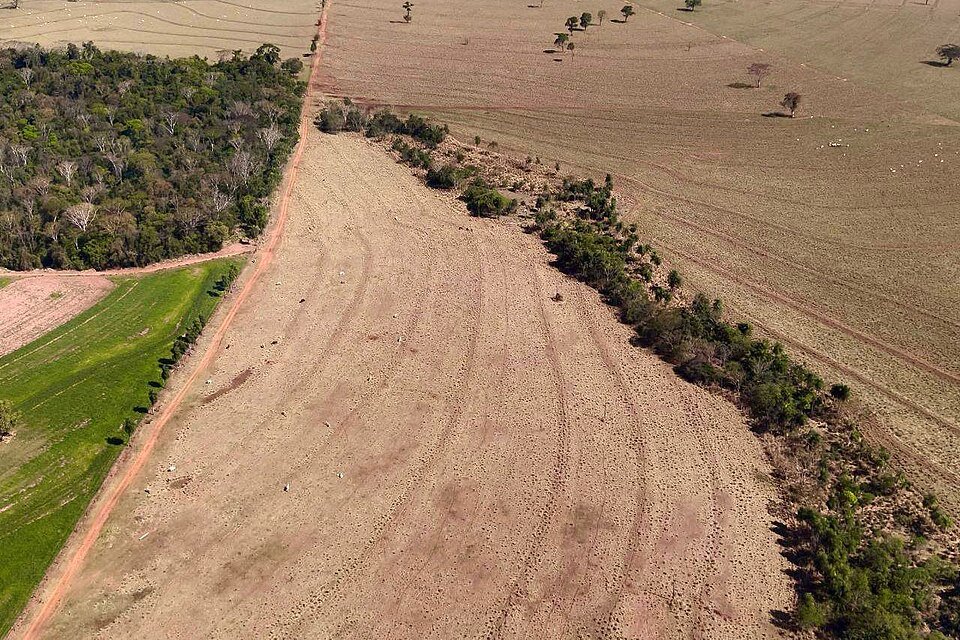
Forest fragmentation and loss intensifies droughts
As forests become more patchy, they not only lose connectivity but also see a disruption in the land-atmosphere feedbacks that help stabilize regional water cycles.

Over half of global forests have become more fragmented
A new global analysis uses multiple metrics incorporating habitat connectivity and aggregation to reveal that more than half of the world’s forests have become increasingly fragmented since 2000.
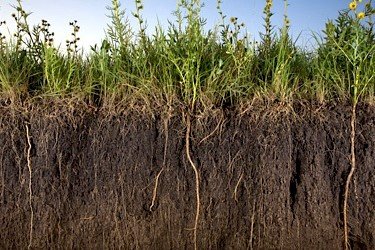
Habitat fragmentation and edges matter for soil microorganisms
New research reveals the significant impact of fragmented habitat on bacteria and fungi in the soil, which provide key ecosystem services but are rarely studied in such a context.

Resolving a 50-year debate: fragmentation decreases biodiversity on multiple scales
A global-wide comparison between continuous and fragmented landscapes leverages data from over 4,000 taxa to refute claims that habitat fragmentation can increase biodiversity at landscape scales.
